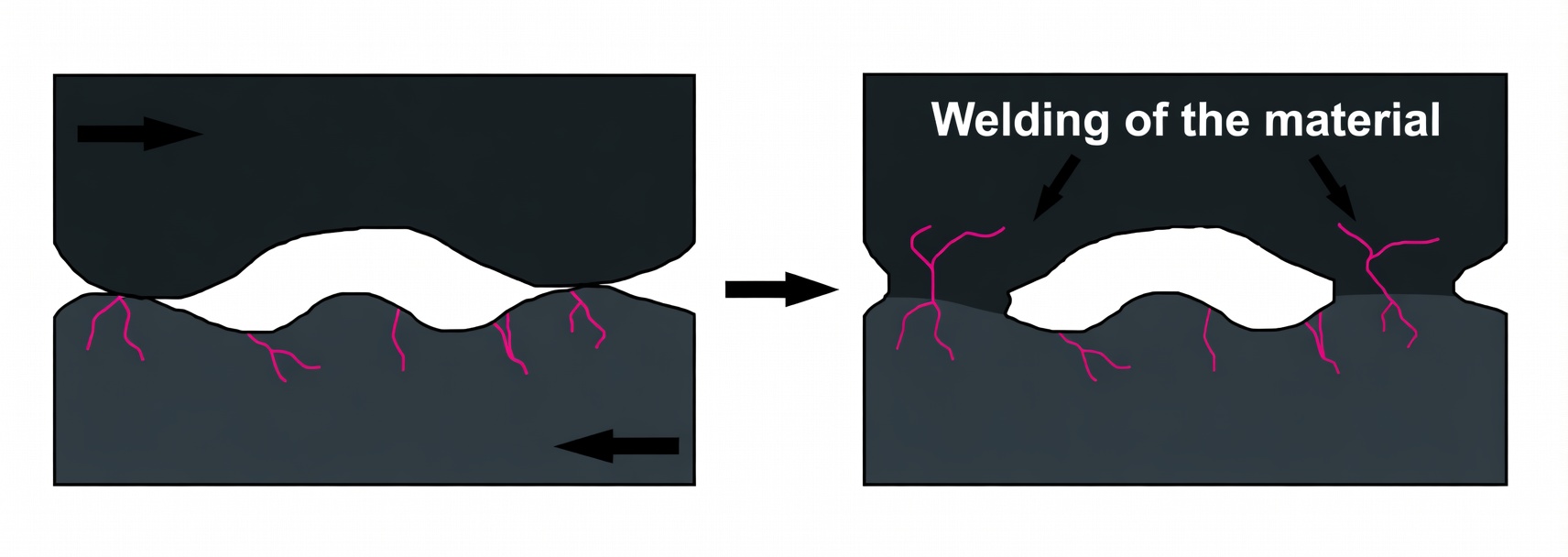
Adhesive wear is a damaging process that occurs when metal surfaces slide against each other without proper lubrication. When the protective oil film is not strong enough, microscopic surface irregularities come into contact and begin to bond together.
This bonding process can result in cold welding, followed by tearing of the surfaces as they continue to move. Over time, this leads to scratches, cracks and severe metal damage.
Why Adhesive Wear Happens
Adhesive wear typically occurs due to:
These conditions weaken the lubricant barrier and allow metal surfaces to interact directly.
Equipment at Risk
Components most vulnerable to adhesive wear include:
Without effective lubrication, these parts can deteriorate rapidly.
Stages of Damage
Adhesive wear usually develops gradually:
At the severe stage, the risk of equipment failure becomes extremely high.
How to Prevent Adhesive Wear
Preventing adhesive wear requires maintaining a strong lubricant film and selecting oils designed for demanding conditions.
Maximum lubricants are engineered with advanced additive technology to provide excellent film strength, reduce friction and protect machinery under extreme loads and temperatures.
Regular maintenance, proper lubricant selection and contamination control are essential for ensuring long-term equipment performance.
Adhesive wear is a damaging process that occurs when metal surfaces slide against each other without proper lubrication. When the protective oil film is not strong enough, microscopic surface irregularities come into contact and begin to bond together.
This bonding process can result in cold welding, followed by tearing of the surfaces as they continue to move. Over time, this leads to scratches, cracks and severe metal damage.
Why Adhesive Wear Happens
Adhesive wear typically occurs due to:
Insufficient lubrication
These conditions weaken the lubricant barrier and allow metal surfaces to interact directly.
Equipment at Risk
Components most vulnerable to adhesive wear include:
Without effective lubrication, these parts can deteriorate rapidly.
Stages of Damage
Adhesive wear usually develops gradually:
At the severe stage, the risk of equipment failure becomes extremely high.
How to Prevent Adhesive Wear
Preventing adhesive wear requires maintaining a strong lubricant film and selecting oils designed for demanding conditions.
Maximum lubricants are engineered with advanced additive technology to provide excellent film strength, reduce friction and protect machinery under extreme loads and temperatures.
Regular maintenance, proper lubricant selection and contamination control are essential for ensuring long-term equipment performance.
12 Mar 2026